
What Is Double Empathy Theory?
What Is Double Empathy Theory?
In recent years, our understanding of autism has shifted significantly. One influential development is Double Empathy Theory, first proposed by Damian Milton in 2012.
Traditionally, social difficulties in autism were explained as the result of an empathy or social understanding deficit within autistic individuals. Double Empathy Theory challenges this assumption.
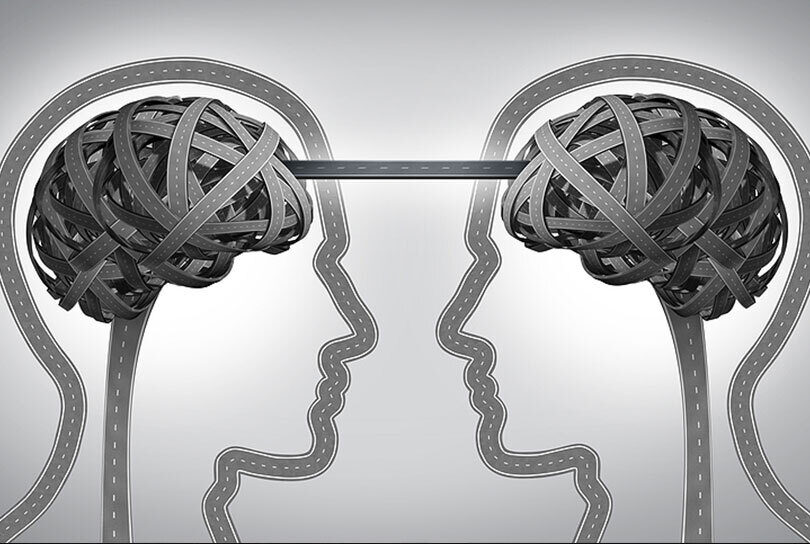
Rather than viewing communication difficulties as a one-sided problem, the theory proposes that social challenges between autistic and non-autistic people arise from a mismatch in communication styles, social expectations, and lived experiences. In other words, misunderstandings are mutual and relational, not the result of a deficit in one group alone.
The “Chinese Whispers” Study
A well-known study illustrating this theory was led by Catherine Crompton and colleagues in 2020.
The researchers adapted the childhood game commonly known as “Chinese Whispers” (also called the telephone game). In this game, one person hears a short message and whispers it to the next person, who passes it on to another, and so forth along a chain. Typically, the message becomes less accurate as it moves through the group.
What Did the Researchers Investigate?
The central question was:
Does communication breakdown differently depending on the neurotype composition of the group?
To explore this, the researchers created three types of chains:
• An autistic-only chain
• A non-autistic-only chain
• A mixed chain alternating autistic and non-autistic participants
Findings and Implications
The findings were striking:
- The autistic-only chain transmitted messages just as accurately as the non-autistic-only chain.
- The mixed chain showed significantly greater deterioration of the original message.
- Participants from both groups reported experiencing greater rapport when interacting with people of the same neurotype.
If autistic individuals had a general communication deficit, we would expect the autistic-only chain to perform worse. However, this was not the case.
Instead, communication difficulties emerged most clearly in the mixed-group chains. This suggests that breakdowns in communication are context-dependent and relational, rather than the result of a one-sided impairment.
These findings support Double Empathy Theory: communication challenges arise from differences in social norms, expectations, and communicative styles between groups.
Importantly, this perspective also highlights a constructive path forward. If communication difficulties stem from mismatch rather than deficit, then they can be addressed through mutual adaptation, shared understanding, and reciprocal empathy the very principles at the heart of Double Empathy Theory.
If you or someone near and dear, require a little support around communication, please reach out to our friendly reception team on 0477 798 932. We would be happy to book you an appointment.
Anna Hill is a Provisional Psychologist at Progressive Psychology